
How Hemorrhaging is Safely Managed During a Home Birth
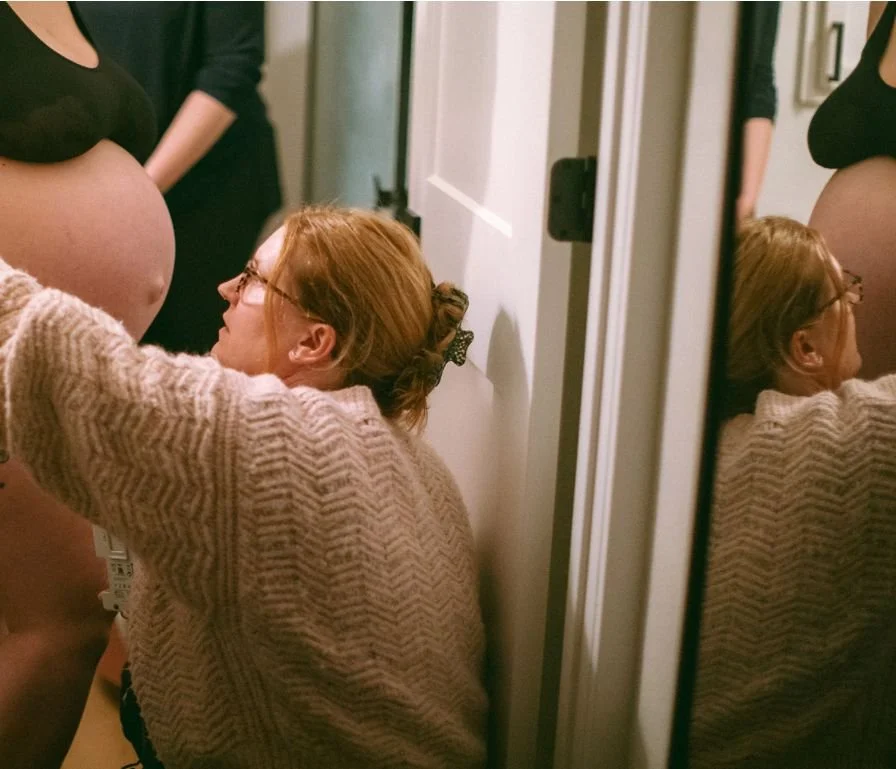
If you’ve ever wondered what midwives are actually doing during a home birth, especially when it comes to bleeding during home birth or preventing complications like postpartum hemorrhage, a lot of that work is happening quietly in the background.
But what exactly is a postpartum hemorrhage? What causes it, and how can it be prevented? In this article, we’ll tackle all of those questions and give you a better understanding of how giving birth with a midwife differs from the traditional hospital setting.
Key Takeaways:
Hemorrhaging during a home birth is taken seriously and actively prevented.
Postpartum hemorrhage is most often manageable when recognized and treated early.
Midwives continuously monitor for signs of hemorrhage after birth, not just blood loss.
Prevention starts in pregnancy, with strong blood levels and individualized care.
If needed, midwives use the same medications and protocols as hospitals.
Hospital transfer is always part of the plan if a higher level of care is needed.
What is postpartum hemorrhage?
At its most basic, postpartum hemorrhage is excessive blood loss after the birth of your baby.
"Postpartum" just means after the birth, but technically, we also include what's called the third stage of labor, which is that window between when your baby is born and when your placenta is delivered. Any blood lost during that time counts toward the total.
When we talk about postpartum hemorrhage, we're usually talking about the first thirty minutes after birth. But realistically, any blood loss that continues in that first twenty-four hours gets added to the tally, and that's actually part of why you'll see such different numbers quoted when people talk about how common it is. Tallying blood loss is inexact under the best circumstances, and in a hospital setting with shift changes and multiple providers, it gets even harder to track accurately.
What's not up for debate is how serious it can be. Postpartum hemorrhage is one of the most significant risks for people giving birth worldwide.
Here in our practice, we're genuinely fortunate since we have access to medications that address it, multiple treatment options, and blood transfusions available if someone has lost a significant amount.
But globally, this is one of the leading contributors to maternal mortality, precisely because those treatments aren't always accessible. Historically, before these interventions existed, postpartum hemorrhage was one of the primary reasons women died in childbirth.
Clinical Thresholds: When Does Bleeding Become a Hemorrhage?
There are two ways we define postpartum hemorrhage clinically, and it's actually important to understand both.
1) Volume
If you've lost 1,000 milliliters of blood after giving birth, that's a hemorrhage by definition, regardless of how you’re feeling. Whether you're sitting up chatting or you've passed out, the volume alone meets the threshold.
2) Signs & Symptoms
If you're showing any signs or symptoms of hypovolemic shock (shock caused by losing too much blood) that's considered a hemorrhage, no matter how much blood we've actually tallied. What’s important to understand here is that every body is different. Some people can lose a significant amount of blood and compensate well; others reach their limit sooner. The volume is one data point, but you are the full picture.
So what are we watching for? These are some of the most important signs of hemorrhage after birth that midwives are trained to watch for:
Feeling faint, or like you can't sit up or stand without passing out
Very low blood pressure or a very high pulse
Needing oxygen or IV fluids because you've lost consciousness
A change in your demeanor, a blankness or distance that wasn't there before
Ringing in your ears or other out-of-the-ordinary symptoms
Any of these constitutes a hemorrhage regardless of the actual volume lost.
This is a big part of why we're paying such close attention in the time right after your birth by checking in regularly, watching your color, your energy, asking how you feel.
What causes a postpartum hemorrhage? (The 4 Ts)
When we’re trying to identify the source of postpartum hemorrhage or unexpected bleeding during home birth,we use a framework called the 4 Ts. It's a way of systematically ruling causes in or out so we can act fast. Here's what each one means:
Tone
By far the most common cause, "tone" refers to uterine tone, whether your uterus is contracting effectively after the placenta is delivered. If it's soft and boggy instead of firm, those blood vessels at the placental site aren't clamping down, and you're bleeding freely. A healthy uterus should feel like a firm little grapefruit in your belly. If it does, we can rule tone out. If it doesn't, that's almost always where we're starting.
Trauma
This means physical damage to tissue, most commonly a deep tear on the perineum or along the vaginal wall that's bleeding heavily. Less commonly, it could be a cervical laceration or, very rarely, something like a uterine rupture. The visible ones are easier to identify and address quickly; the ones higher up require a closer look.
Tissue
Tissue refers to retained tissue, a fragment of placenta or membrane that's still inside the uterus and physically preventing it from clamping down. It can also include a placenta that has partially detached internally but hasn't delivered yet, which causes bleeding at the site. If retained tissue is the culprit, getting it out is a key part of stopping the bleeding.
Thrombin
The rarest of the four, thrombin, refers to a coagulation issue. Essentially, the blood isn't clotting the way it should. Most people who have an underlying clotting disorder will have some history that points to it, so it's usually low on the list. But it's worth ruling out if the other three don't explain what's happening.
How Midwives Prevent Postpartum Hemorrhage
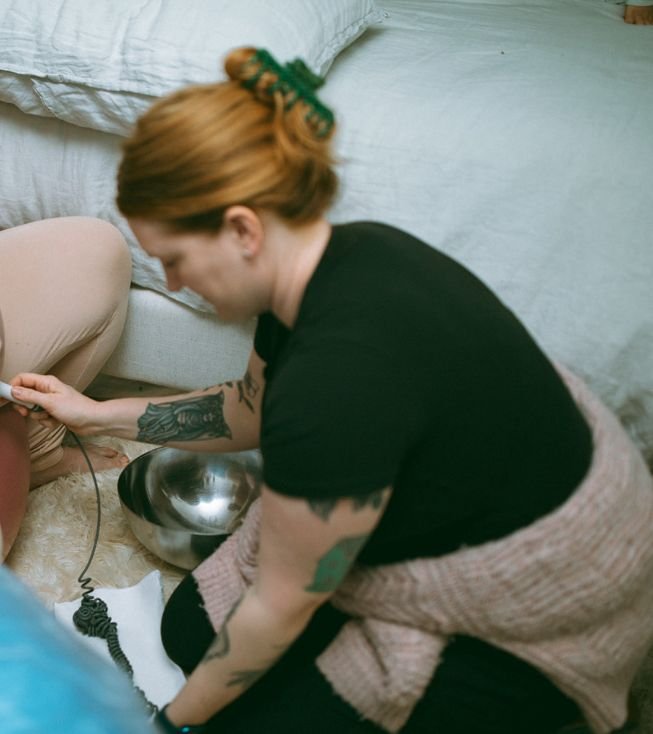
Most people think postpartum hemorrhage management starts after a problem appears. But in midwifery care, it starts much earlier, often at your first prenatal visit. That way, by the time you’re in labor, a lot of the most important work is done.
1) Starting With Your Blood Work
Early in care, we run routine labs with hemorrhage risk in mind.
We’re looking closely at:
Platelets: These help your blood clot. Low levels can increase hemorrhage risk.
Hemoglobin and ferritin: These tell us about your iron levels and iron stores.
Pregnancy naturally expands your blood volume. If your iron levels are already low, that expansion can push you into anemia by mid-pregnancy, sometimes without anyone catching it.
We check early so we can get ahead of it. Not only can anemia make you feel exhausted throughout your pregnancy, but more importantly, going into birth with strong iron levels is genuinely protective. We’d much rather rule it out as a risk factor entirely than manage it in the background on your birth day.
In a home birth setting, we have a lower tolerance for that kind of risk because we don't have a blood bank down the hall. We would always rather prevent the need for a transfusion than have to respond to one.
So if your levels need work, we work on them together, with protocols and support specific to your picture.
2) Building Your Foundation Throughout Pregnancy
This is where continuity of care really matters. We see your records, we track your trends, and we don't let things slide.
If something starts to shift, we don’t “wait and see.” We:
Talk about it
Adjust your care plan
Support you with specific, individualized protocols
We check your blood work again later in pregnancy, closer to your birth, so we know exactly where you're going into birth. The goal is to arrive at your birth well-nourished, well-supported, and low-risk wherever we can make that happen.
3) Your Emotional and Psychological Preparation
This might be the part that surprises people most, but stress is a real and significant contributor to postpartum hemorrhage.
High stress means lower oxytocin, and lower oxytocin means poorer uterine tone, which, as we've covered, is the number one cause of hemorrhage. As such, preparing you emotionally for your birth is integral to hemorrhage prevention.
Part of that means having honest prenatal conversations about your specific risk factors. If we're anticipating a larger baby, for example, we talk through what that could look like, including the possibility of shoulder dystocia, what it would mean in a home birth setting, and exactly how we'd manage it. Not to scare you, but because walking into your birth with that knowledge means you're less likely to be caught off guard. A startled, deer-in-the-headlights moment during birth spikes your stress hormones and drops your oxytocin, and that matters clinically.
The same goes for your history.
If you've had a previous birth experience that was frightening or traumatic, we want to know. If you've experienced sexual assault or medical trauma of any kind, we want to know. Not as a box to check, but because it shapes how we show up for you, how we communicate, how we ask permission, how we help you feel safe in your body when you're at your most vulnerable. That preparation is part of what makes the difference.
Related: How Hormones Change During Pregnancy and Affect Your Body
During Birth: Watching, Preventing, and Staying Ahead
All of that prenatal groundwork comes with us into your birth. And once you're in labor, we're continuing to think about hemorrhage prevention in real time.
We watch for maternal exhaustion because a truly exhausted body, including muscles, is less likely to contract strongly after the birth. If you've been laboring for a long time without much food or fluid, we might offer IV fluids to support you before we need them for anything else.
We support client-led pushing, encouraging you to push in whatever position feels natural and instinctive to your body.
We stay aware of the tissue picture, and if it looks like a significant tear might be coming, we'll offer a gentle suggestion, always with your permission.
And the moment your baby is born, while you're doing exactly what you should be doing, marveling, crying, meeting your person, we're quietly doing our clinical job.
We also always keep your baby with you, unless there is a true clinical emergency that requires otherwise. If your baby needs a little encouragement to transition, to clear their airway and take their first good breaths, we do it right there on your chest, calmly and quietly. Because taking your baby away from you, even briefly, triggers a stress response in your body that is real, immediate, and directly linked to increased bleeding.
And then there's active management of the third stage: a small intramuscular injection of Pitocin given after your baby is born, in your thigh or your deltoid, depending on where you delivered. It's one of the most effective tools we have for prompting your uterus to contract appropriately and reducing hemorrhage risk significantly. We offer it as an informed choice; we'll talk about it prenatally, and you decide. But it's there, and it works.
How Midwives Treat Hemorrhage at Home
Even with everything above in place, sometimes a hemorrhage happens. When it does, this is how midwives treat hemorrhage at a home birth. We have a clear and practiced response, and we move through it quickly while still keeping you informed and the environment as calm as we possibly can.
Medications
We move through a stepwise approach:
Pitocin first, intramuscularly to start, and almost always this is enough;
Misoprostol, if needed, as the next step;
Methergine, a smooth muscle contractor, which helps tighten blood vessels and clamp the uterus down further;
Tranexamic acid, which helps prevent clots from breaking down.
Physical Interventions
Alongside medications, there are physical interventions we may use:
Uterine massage to encourage tone
Helping the placenta deliver if it hasn't
Emptying the bladder (a full bladder can prevent proper uterine contraction)
IV Fluids and Oxygen
We can also place an IV in the moment if needed and provide:
Fluids
Oxygen
Faster medication delivery
The key difference from a hospital setting is that we don't start with an IV already placed in everyone, because we don't believe the routine benefit outweighs the downsides for low-risk births. But if needed, we can establish access quickly, and from there, the medications and protocols are exactly the same.
That said, we also recognize that some situations call for a more proactive conversation. If you're coming into labor with certain risk factors, like low platelets, anemia, a longer labor, or the possibility that your baby may need extra support right after birth, we'll talk through whether placing an IV earlier in labor might make sense for you. It's not something we recommend across the board, but for the right circumstances, it's absolutely an option we'll discuss together and support you in deciding.
Simpler Solutions
Sometimes, the answer is simpler than anything listed above.
If you've been in labor for twenty-four hours, haven't eaten much, have lost some blood, and you're feeling dizzy and faint, sometimes all you need is a little snack and five minutes of quiet.
Being in your home allows us to step back and ask, “What does this body actually need right now?” That’s part of how we practice, and it's something that often gets lost in more clinical settings.
We Stay Until You’re Stable
Finally, we don’t leave until:
Bleeding is fully normal
You can stand and move safely
You can eat, sit up, and use the bathroom independently
You are never left in a compromised state.
When We Transfer to a Hospital
While hemorrhage is one of the more serious home birth complications, home birth safety depends on knowing when home is no longer the right place to be, and we never hesitate when that moment comes.
We transfer if:
Bleeding isn’t responding to treatment
Blood loss reaches a level requiring transfusion
You need a higher level of care
In these cases, we call 911, begin stabilization immediately, and stay with you through the process. We communicate directly with the receiving team and ensure continuity of care. A potential transfer is always part of the birth plan, and something we prepare for long before you give birth.
Related: How Midwives Handle Complications during a Natural Birth
Hemorrhaging in a Home Birth Is Managed Differently
When we talk about managing hemorrhaging in a home birth, we’re not talking about recreating the hospital setting in your living room. It’s a fundamentally different model built on the understanding that your hormonal environment, your emotional experience, and your physiological safety are not separate things.
When we say we approach birth holistically, this is what we mean. We mean that knowing you, trusting you, keeping the room calm, keeping your baby on your chest, eating before you need to, and staying grounded ourselves is all part of hemorrhage prevention. It’s all clinical care.
The midwifery model and the medical toolkit work together. The result for most people is a birth that is not only safer than it might otherwise be, but one that is truly empowering.
If you’re considering a home birth in the Portland area, you can schedule a free consultation to learn more about our approach and our postpartum care model.