
What Does Natural Childbirth Feel Like?
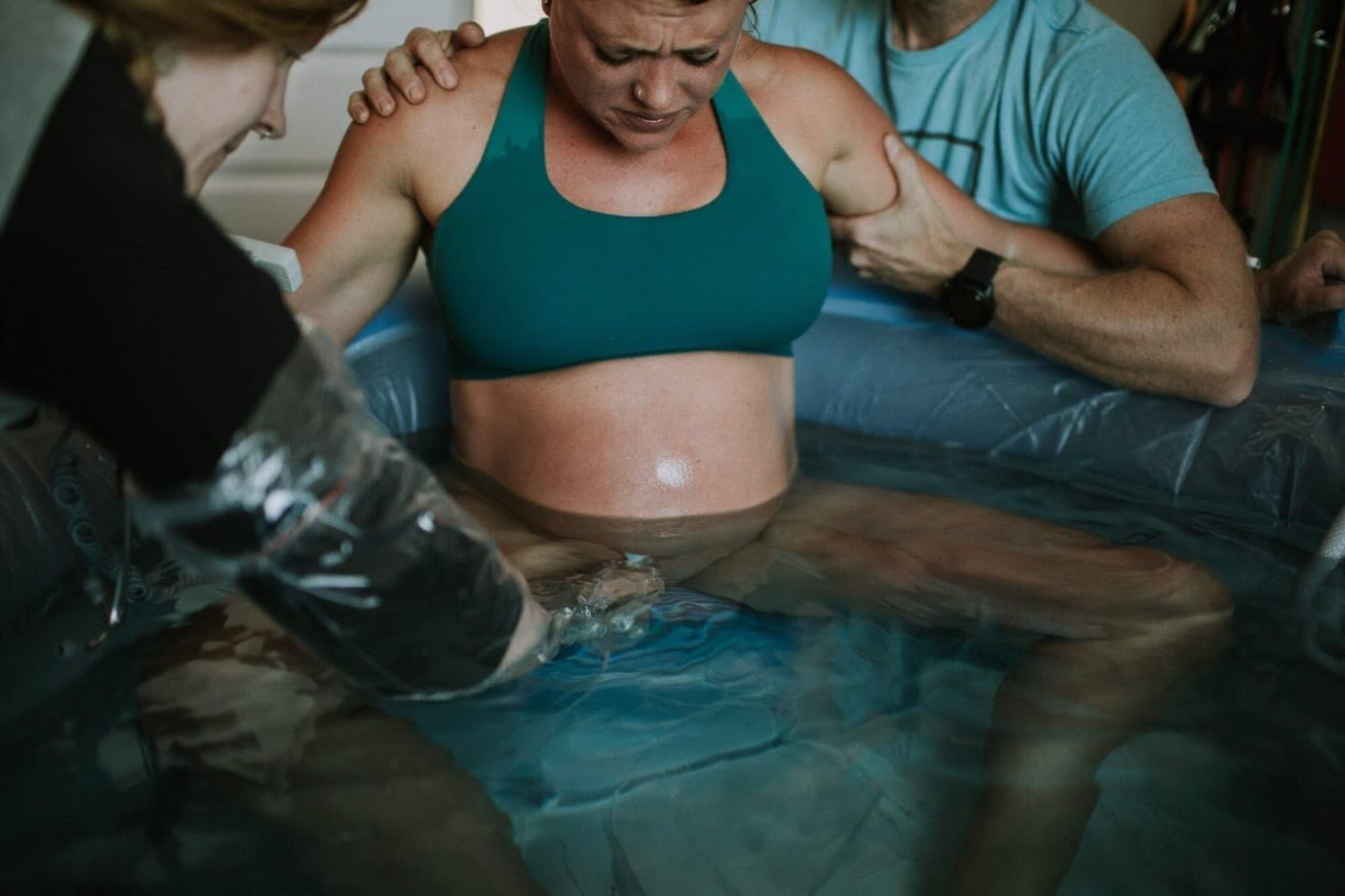
Birth is one of the most personal experiences a person can have, and no two labors are exactly alike.
It's genuinely hard to put into words, because the natural childbirth experience exists in a category all its own. What we do know, from years of supporting families, is that how safe someone feels during labor shapes how they experience it, sometimes more than anything else. When birthing people feel truly cared for and in control of what's happening, they tend to carry their birth with them differently.
So while we can't tell you exactly what your birth will feel like, we can walk you through what so many others have experienced, from the first flutter of early labor all the way through pushing. Our hope is that this gives you a real, honest picture so you can step into your birth feeling prepared and confident.
Key Takeaways:
Early labor feels manageable. Active labor asks more of you. Transition is the hardest and the shortest.
Contractions come in waves, with rest in between.
Natural childbirth is hard. It's also something your body is built to do.
The people in the room with you matter more than most people realize.
Birth at home supports the hormones and nervous system responses that help labor unfold naturally.
The Hormones Doing the Heavy Lifting
Before we talk sensations, it helps to understand what's happening in your body. During natural childbirth, your hormones surge in ways you've never experienced before. Endorphins rise alongside the intensity of labor and help to dull it, your body's own natural response to what it's asking of you. By the time you're deep in active labor, many birthing people describe feeling like they're in an altered state, not absent, but deeply inward. Spaced out, euphoric, and present all at once.
That hormonal surge is also part of what makes natural birth without an epidural possible. It's genuinely hard, and people who choose this path do so knowing that. But those same hormones that intensify the experience are also what help you move through it.
Read More: How Hormones Change During Pregnancy and Affect Your Body
The Stages of Labor: What to Expect
1) Early Labor: Excitement, Anticipation, and Some Doubt
Labor usually begins gradually. Contractions start as mild, almost period-like cramping and low back ache, coming in waves with rest in between. Most people in early labor feel a mix of excitement and nervous energy. There's often still a sense of modesty, some hunger, and a strong current of "okay, this is really happening."
The beauty of a contraction is that it has a shape. It builds, peaks, and then releases. You get a break, and then it builds again. That rhythm becomes something you can work with, especially with good support around you.
2) Active Labor: Going Inward
If early labor feels manageable, active labor is when things shift.
As labor progresses, the contractions grow longer, stronger, and closer together. This is when most people start going inward. You may not feel like talking, and you'll likely lose your appetite. The sensations take more energy and focus to move through, and many birthing people find themselves moaning involuntarily as a way of coping, which is completely normal.
Active labor is also when the tub, counter pressure from a partner or doula, position changes, and breathing techniques can make a real difference.
3) Transition: The Most Intense, and the Shortest
Transition is the final stretch of active labor before pushing. While it is the shortest part of labor, it's also the most intense phase by far.
In transition, many birthing people experience an extreme psychedelic state and lose their sense of time entirely as they become completely overwhelmed by the pain of their contractions. It's common to shake, feel nauseated, or vomit.
Many people growl or make sounds they'd never expect from themselves. There's often a moment of real doubt, a feeling of "I can't do this anymore," which is actually one of the most reliable signs that you're almost through it.
Transition asks for surrender more than strength.
4) Pushing: You Come Back Online
Something interesting happens when it's time to push. Many birthing people describe a kind of re-awakening. You feel more aware of the room again. There's a rush of adrenaline, and a heightened sense of focus similar to what athletes describe feeling before a big moment.
Pushing without coaching often feels like intense, overwhelming pressure in the rectum, like your body is urgently telling you to bear down. That's exactly what's happening. The uterus is the driving force, and your body follows. You can feel the tissues stretching as your baby moves through. It's a lot, but the endorphins are still present doing their work so the sensations are still dulled relative to what they would be like in a different state.
The Part That's Hard to Put Into Words

While natural childbirth is an intensely physical experience, there are strong emotional, spiritual and psychological components to it.
Birth at home, surrounded by familiar smells, familiar faces, and the space where you feel most like yourself, tends to support that experience. It all contributes to higher oxytocin and lower stress. It helps people to feel safe and trust in order to surrender to the intensity of their labor.
Spiritually, childbirth can ask a woman to surrender or submit to the natural process in a way that essentially asks her to trust something greater than herself. She is letting go of control and allowing herself to be overcome by a natural force that will birth her baby, which is a spiritual process.
Emotionally, the vulnerability of birth means that the person giving birth will do best, and have the most transcendent experience when they are with the people with whom they feel the most bonded and safe. She is outside of her own control, birthing the person she loves most in the world (or one of them, if she has multiple children) and she feels both protective and powerful and also vulnerable.
Having people around who understand that mixture and how to be with that energy means the birth can unfold as it should without the interruption of ego in the birth room.
Related: Ways Midwives Provide Emotional Support Throughout Pregnancy
FAQs
What do contractions feel like?
Contractions are the tightening and squeezing of the uterine muscle. They come in waves, building over about a minute, peaking, and then releasing, giving you a short break before the next one begins.
How painful is natural childbirth?
Natural childbirth pain is real, and we won't minimize that. Most people describe it as the most intense physical experience of their life. That said, how painful natural childbirth feels is shaped by a lot of factors, including how safe and supported you feel, how prepared you are, and what coping tools you have access to. Birthing people who feel cared for consistently report a different experience than those who don't. It's challenging, but many people say it feels more like intense pressure than pain, and it's something the body is naturally built to handle.
What does crowning feel like?
Crowning is when your baby's head is visible at the opening of the vagina and your tissues are stretching around it. Many people describe an intense burning or stretching sensation at this stage, sometimes called the "ring of fire." At the same time, endorphins are still active, which helps to take the edge off. It's brief, and for many birthing people it signals that their baby is almost here.
How is labor pain different from period cramps?
Early contractions can feel a lot like period cramps, mild cramping and low back ache that comes and goes. But as labor progresses, the sensations become something else entirely. Active labor contractions are longer, stronger, and much more intense than anything most people associate with a typical period. They take over your whole body and require real focus to move through.
What's the difference between early labor and active labor symptoms?
Early labor tends to feel manageable. Contractions are uncomfortable but workable, and most people still feel like themselves, aware of the room, able to talk, maybe even a little hungry. Active labor is when things shift. Contractions grow longer, stronger, and closer together, and most birthing people start going inward. You may lose your appetite, stop wanting to talk, and find yourself needing to really focus through each wave. That shift in how you're coping is often one of the clearest signs that active labor has begun.
Getting Ready to Give Birth
If you want a real feel for what natural childbirth looks like, watching birth videos is one of the best ways to build honest expectations. Look for videos that reflect the kind of birth you're hoping to have. You can follow Hearth & Home on Instagram or search for natural home birth videos on YouTube to get started.
If you'd like to go deeper, our childbirth education classes are a great space to ask questions, get comfortable with the process, and connect with other families. And if you're considering whether midwifery care might be right for you, schedule a consultation with us. We look forward to hearing from you!


