
Group B Strep (GBS) in Pregnancy: Prevention & Treatment

If you've made it to your third trimester, chances are you've heard the letters "GBS" mentioned by your provider, or maybe you've stumbled across it in a late-night research spiral. It's one of those topics that can feel a little scary because it involves words like "infection" and "antibiotics," and because so much of the information out there is either overly clinical or oversimplified.
So let's slow down and actually talk about it. What group B strep is, why you'll be screened for it, what your options really are, and how we approach it here at Hearth & Home. Our goal is to make sure you have the full picture so you can decide what feels right for you and your baby.
What You Need to Know:
GBS (group B streptococcus) is a common bacteria that many people carry in their gut and, from there, sometimes in the vagina or rectum. Carrying it doesn't mean you're sick.
You'll typically be screened between 36 - 38 weeks, with results usually back within a few days.
Standard hospital protocol is IV antibiotics in labor for anyone who has ever screened positive, even if a later test comes back negative.
At home, we take a risk-based approach, meaning antibiotics are offered based on your actual risk factors in labor, not just a single test result.
Gut health, probiotics, and herbal suppositories are approaches some clients use to support a negative screen. They aren't backed by large clinical trials, but they carry very little risk and many of our clients have had success with them.
You always have the right to informed consent and informed refusal. Whatever you decide, that decision is yours to make, and it can change as your pregnancy and labor unfold.
Listen to our podcast episode about GBS prevention and treatment
What Is Group B Strep?
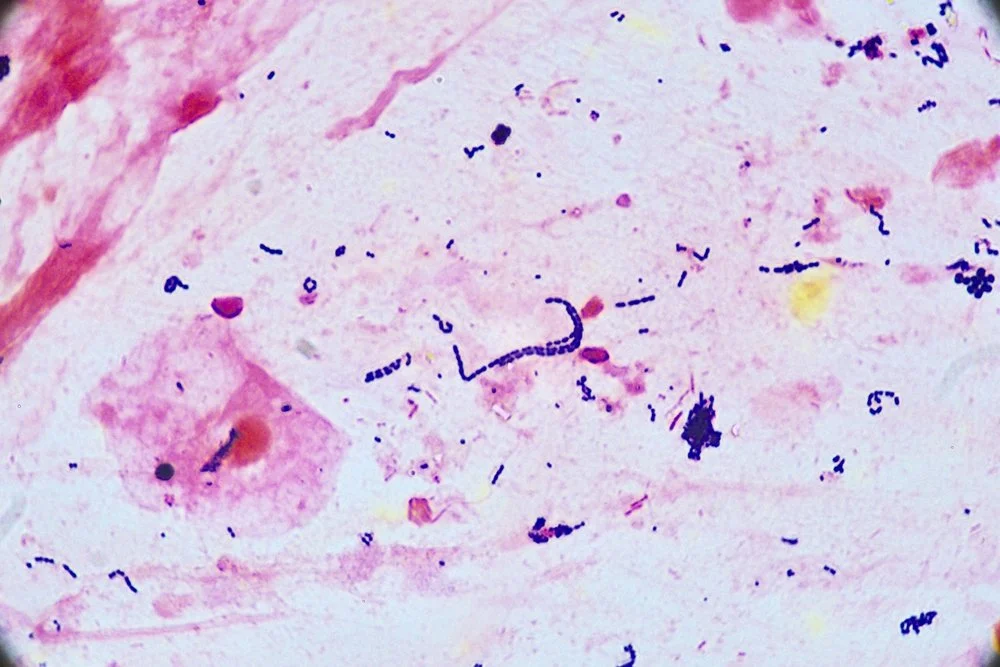
GBS is a type of bacteria that lives naturally in a lot of people's bodies, usually starting in the gut and sometimes making its way toward the vagina. It's incredibly common, and having it doesn't mean anything is wrong with you. It's not a sexually transmitted infection, and it's not a sign of poor hygiene. Think of it more like one of the many organisms that just naturally live in and on our bodies, one that occasionally shows up in a place where it could pose a small risk to a baby during birth.
The reason it gets attention in pregnancy is that if a baby is exposed to GBS during birth, there's a small chance it could lead to an infection. The whole reason screening and prevention conversations happen at all is because of what it could mean for your baby in specific circumstances.
When You'll Be Tested for GBS During Pregnancy
Most people are screened for GBS between 36 weeks - 38 weeks. It's a simple swab that can be done by your provider or by yourself, and results typically come back within a couple of days.
One thing that surprises a lot of people is that GBS is transient. That means your status can change. You could screen negative at 36 weeks and still be colonized by the time you go into labor, or you could screen positive and clear it before labor even starts. The timing of the standard screen is really just a snapshot, an educated guess about what's likely to be true a few weeks later, not a guarantee.
That's part of why, even if you screen negative, we encourage you to keep doing whatever's been working for you (good hydration, a gut-supportive diet, probiotics if you're using them) all the way through labor. A negative screen a month before birth doesn't necessarily mean negative at birth.
Options for GBS Prevention
If you'd like to try to shift your GBS status before labor, or you're simply someone who likes to feel proactive about your health, there are a few paths people explore.
A quick disclaimer: none of these prevention strategies have been studied in large, double-blind clinical trials. That doesn't mean they don't work; it just means the research hasn't caught up yet. However, from what we've seen in our own practice, these options tend to be effective and come with very little downside if you're curious to try them.
1) Start With Gut Health
Since GBS often originates in the gut, a lot of the conversation starts there. Things like eating more leafy greens, cutting back on processed foods and added sugar, incorporating fermented foods like sauerkraut or kimchi, staying well hydrated, and simply moving your body regularly all support a healthier gut biome overall. None of this is about perfection. We'll always meet you where you are, whether that's a full overhaul or a few small swaps that feel realistic for your life right now.
Related: Holistic Postpartum Care: What New Moms Need to Know
2) Take Probiotics
A daily oral probiotic is one of the simplest tools people reach for. For those at higher risk (say, a history of yeast infections or a previous GBS-positive pregnancy), a vaginal probiotic may also be worth considering, especially heading into the third trimester. The idea here is that GBS is opportunistic, so if there isn't much room for it to grow, it has a harder time taking hold.
3) Consider Herbal Suppositories
Some clients choose to use an herbal suppository routine, like the one described by midwife and author Aviva Romm, which involves inserting a blend of antimicrobial herbs and oils vaginally, usually nightly leading up to a rescreen. It's not exactly "treatment" in the medical sense so much as it's about creating an environment where GBS has a harder time thriving. We'll always walk you through exactly what this looks like in practice if it's something you want to explore.
Whatever combination of these you choose, if any, it's genuinely your call. As midwives, we're here to lay out what we know, answer your questions honestly (including the ones about how strong the evidence actually is), and support whatever direction feels right to you.
Group B Strep Real-Life Experiences:
A client of ours screened positive at 36 weeks and knew right away she wanted to avoid antibiotics, especially IV ones. Antibiotics had always been rough on her digestion, and she wasn't thrilled about the potential effect on her milk supply either. So she started a daily probiotic, leaned into a gut-supportive diet, and began the herbal suppository routine.
Two weeks later, at her 39-week rescreen, she tested negative. She kept up the routine since it seemed to be working, and ended up going all the way to 41 weeks before her baby arrived.
Because her most recent screen was negative, she declined antibiotics in labor and went on to have an uncomplicated vaginal birth. Had she been planning a hospital birth, that early positive result would have followed her regardless of the negative rescreen. Being at home meant her care could reflect where she actually stood, and not just where she started.
GBS Treatment: Your Options at Home vs. in the Hospital
This is where things tend to diverge quite a bit depending on where you plan to give birth. Here's what treatment could look like depending on whether you're giving birth in a hospital or in our care.
In a hospital setting, the standard approach follows CDC guidance. If you've ever tested positive for GBS at any point in this pregnancy, you'll be treated as positive in labor, even if a later screen comes back negative. The recommendation is IV penicillin (or an alternative if you're allergic). You always have the right to decline any treatment, but the pressure to accept antibiotics tends to be stronger in a hospital environment, and a prior positive result will likely follow you regardless of more recent test results.
In our care, we take a risk-based approach. Rather than treating every past positive as an automatic yes to antibiotics, we look at your actual circumstances in labor, like whether your water has been broken for an extended period. If there aren't active risk factors present, many of our GBS-positive clients choose to labor without antibiotics, and our monitoring doesn't actually change much either way. We check fetal heart tones on a regular schedule throughout active labor, and if your water breaks, we pay closer attention to things like your temperature and the color and smell of your amniotic fluid, since those are the signs that would tell us something has shifted. If we ever become concerned about a possible infection, that's when we'd talk with you about transferring to the hospital, where antibiotics would then make sense.
To be clear, some clients in our care choose antibiotics anyway, even with a negative screen, simply because it helps them feel more at ease. That's a completely valid choice too. Antibiotics come with their own set of tradeoffs, and there's no universally "right" answer here, just the answer that's right for you.
Related: How to Create an Effective Birth Plan with a Midwife
A Real Conversation, Not a Script
One of the things we care about most is making sure you never feel judged, no matter what you decide. When we talk through GBS with clients, we explain what it is, how common it is, what could happen in the rare case of infection, and anything specific to your individual risk picture. We don't soften the hard parts. If there's a real chance your baby could end up in the NICU, we want you to have heard that clearly, because that's what informed choice actually means.
But we also genuinely believe we don't have all the answers for your life. You know things about yourself and your circumstances that we don't. Our job is to bring the expertise and the information; the decision is always yours, and it can evolve. It's completely normal to feel confident about refusing antibiotics one week and want to revisit that choice the next. That's just part of being a human getting ready to give birth, and we're here for that conversation whenever it comes up.
If you'd like to learn more, be sure to listen to our podcast episode about GBS prevention and treatment.
Frequently Asked Questions
Is GBS dangerous to me?
Not typically. Carrying GBS doesn't usually cause symptoms or problems for you. The concern is specifically around the small risk of a baby being exposed to it during birth.
Can I actually get rid of GBS before labor?
It's possible. GBS is transient, meaning your status can change over time. Some clients who screen positive at 36 to 37 weeks use a combination of probiotics, gut-supportive eating, and herbal suppositories, then rescreen and get a negative result a couple of weeks later. It doesn't work for everyone, but for many of the clients in our practice who tried it, it did.
If I screen negative once, does that mean I'll stay negative?
Not necessarily. It's possible to screen negative and still be colonized by the time labor starts, which is part of why we encourage sticking with whatever's been supporting your gut health all the way through birth, not just up until the test.
What if I tested positive but had a negative result more recently?
In a hospital, standard protocol tends to treat you as positive regardless, since a previous positive result generally follows you for the rest of the pregnancy. At home, we take your most current information into account as part of a broader, risk-based conversation.
Does declining antibiotics change how I'll be monitored in labor?
Not dramatically. We still monitor fetal heart tones on a regular schedule. If your water has broken, we pay extra attention to your temperature and the color and smell of the amniotic fluid, since those are the clearest signs that something may need more attention.
Are probiotics and herbal suppositories backed by research?
Honestly, not by large clinical studies at this point. What we can tell you from our own clinical experience is that they tend to work and carry a very low-risk profile. We'll always be upfront with you about what's well-studied and what's still more anecdotal.
What happens if I change my mind mid-pregnancy or mid-labor?
That's more than okay. You're allowed to change your mind, whether that means choosing antibiotics after initially declining them, or the reverse. This is your body and your birth, and we're here to support you through whatever that looks like.